Symptoms of constipation can be uncomfortable for our dogs. Our Richmond vets share signs of constipation in dogs, causes, and tips for treating the condition.
What is Constipation in Dogs?
If your dog’s bowel movements are infrequent, difficult, or absent, they are suffering from one of the most common health problems seen in pets’ digestive systems - constipation.
Inability to pass feces, or pain associated with passing feces is considered a veterinary medical emergency and requires immediate care.
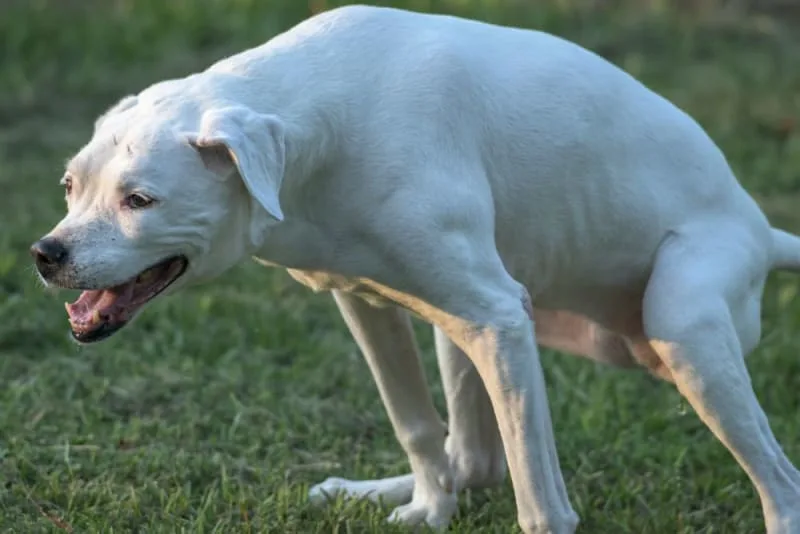
If they are straining when attempting to defecate and/or producing hard, dry stools, these are also signs of a problem.
Some dogs may also pass mucus when trying to defecate, circle excessively, scoot along the ground, or squat frequently. If you press on their stomach or lower back, they may have a tense, painful abdomen that causes them to growl or cry.
Causes of Constipation in Dogs
There may be many factors contributing to your dog’s constipation:
Lack of exercise
Excessive or insufficient fiber in his diet
Dehydration
Blocked or abscessed anal sacs
Excessive self-grooming (may cause a large amount of hair to collect in the stool)
Neurological disorder
A side effect of medication
An orthopedic issue causing pain when a dog positions themselves to defecate
Enlarged prostate gland
Sudden change in diet
Matted hair surrounding the anus (caused by obesity or lack of grooming)
Ingested pieces of toys, gravel, plants, dirt, and bones caught in the intestinal tract
Obstructions caused by tumors or masses on the anus, or within the rectum
Trauma to pelvis
Elderly pets may experience constipation more often. However, any dog that faces one or more of the scenarios above can suffer from constipation.
Symptoms of Constipation
Signs of constipation include straining, crying, or crouching when attempting to defecate. Also, if it’s been more than two days since he has had a bowel movement, you should see your vet immediately.
Keep in mind that these symptoms may be similar to those that could point to a urinary tract issue, so it’s important that your vet perform a full physical exam to diagnose the cause.
How Constipation is Treated in Dogs?
There are many home remedies with dubious results. The best thing to do is check in with your veterinarian and bring your dog in for an exam. Blood tests may help reveal infection or dehydration. The vet will likely take a medical history, conduct a rectal examination to rule out other causes or abnormalities, and may recommend one or a combination of these treatments:
A prescription diet high in fiber
A stool softener or other laxative
More exercise
Enema (administered by a professional, not at home, as there could be a risk of injury or toxicity if done incorrectly)
Adding more fiber to your dog’s diet (wheat bran, canned pumpkin, or products such as Metamucil)
A small bowl of goat or cow milk
Medication to increase the large intestine’s contractile strength
Follow your vet’s instructions closely, as trying too many of these or the wrong combination may bring on other problems.
What Can Happen if My Dog’s Constipation is Not Treated?
If your dog’s constipation goes untreated, he may eventually be unable to empty their colon on their own (a condition called obstipation). The colon then becomes packed with an uncomfortably large amount of feces, causing lethargy, unproductive straining, loss of appetite, and potentially vomiting.
Note:The advice provided in this post is intended for informational purposes and does not constitute medical advice regarding pets. For an accurate diagnosis of your pet's condition, please make an appointment with your vet.
Contact our vets in Richmond today if your dog is showing symptoms of constipation.